January 27, 2023

BUILDING GREAT (AND REALLY EXPENSIVE) THINGS

Grand Central Madison, the new train station bored into the rock beneath Grand Central Terminal, is finally open.  When it’s fully operational it’s expected to serve 160,000 daily Long Island RR riders.  And by freeing up space at Penn Station (once dominated by LIRR), some Metro-North trains will be able to terminate there instead of at GCT.

As a friend from an engineering consultancy put it in social media:  “This new station proves we CAN build great things (in the US).”  Yeah… a decade late and 400% over budget.

I hate always to be the cynic, but if we don’t understand our mistakes we’ll keep repeating (and over-paying for) them.

The New York Times did an investigation in 2017 showing that the construction cost for Grand Central Madison and its new tunnels was seven times the average of such projects elsewhere in the world.  Why?

Feather-bedding for one: 200 of the 900 construction workers digging the huge tunnels were being paid $1000 a day but effectively doing nothing.  This was discovered in 2010 and the excess workers were laid off, but the incident was not reported to the public which is paying for the project.

Right now the MTA is facing a fiscal cliff:  it doesn’t have enough money to keep the region’s mass transit running without a fare increase.  But they’re still burning through $51 billion on capital projects like this one:  new ADA access at subway stations, new signal systems, important stuff but never cheap.

During the pandemic the MTA paid McKinsey consultants millions to predict when transit ridership would return (thereby reducing their operating deficits).  The consultants told them what they wanted to hear, that commuters would soon be back in droves!  Wrong.

Subway ridership is now only 65% of pre-COVID numbers, buses about 62% and Metro-North only 68%.  On the subways the perception (and reality) of crazies and criminals is discouraging riders further… while actually encouraging fare beaters.  The MTA says it loses a half billion dollars a year in uncollected fares!

Those are facts.  So too is the reality, finally, of a brand new train station in New York City!  But will it deliver on the promises that were made to justify its expense?

The MTA (parent of the LIRR and Metro-North) says the new Grand Central Madison will save “40 minutes commuting time” for Long Island riders heading to the east side of Manhattan.  Maybe.


Just emerging from the new station, 15 stories below street level, takes almost 12 minutes riding one of the four ginormous 182 foot long escalators.  I have a pool going as to how quickly one of them breaks down. (Email me if you want in.)

Metro-North can’t keep a single story escalator from the lower to upper level of GCT working… or the escalators constantly broken down connecting to Madison and Park Avenues, let alone these monsters. 

But next time you’re in Grand Central, go take a look… while the new station is still sparkling, bright and in full working order.  After all, you paid for it.

January 21, 2023

TRANSPORTATION OBFUSCATION

 Why do the folks who run our commuter railroads act like their customers are stupid?  Though desperate for ridership to return (to fight huge post-COVID deficits), they ignore legitimate commuter feedback and do everything they can to hide their failures.

Case in point: the Commuter Rail Council, the independent watchdog group created by the CT legislature almost 40 years ago, on which I served for 19 years.  During the Malloy administration we were getting a bit too vocal in our complaints, so a senior Democrat warned me (and another Council member) to cool it or “your little Commuter Council will be written out of existence”.

Sure enough, they tried, slipping a bill into the hopper to eliminate our group and its criticism.  To his credit, State Senator Tony Hwang saved the day, rewriting the Council’s mandate, though in a much watered-down version.

Senator Hwang hosted members of the Commuter Council at the Capitol this week for an update on what riders are thinking, and Hwang’s colleagues on the Transportation Committee got an earful.

Jim Gildea - Chairman Commuter Council
Jim Gildea - Commuter Council

The Council’s usually affable Chairman Jim Gildea said the CT Dept of Transportation is, once again, unresponsive to simple requests.  Since April the Council has asked for data on on-time performance by station, when Shore Line East service would be fully restored, ridership numbers on the much-touted 99 minute express trains from New Haven to GCT and, yes, the status of Quiet Cars.

But the agency didn’t reply for months.  Why?  Because they’re obviously hiding their failures behind a veil of bureaucracy.  “We’ll have to get back to you,” seems their constant refrain.

Governor Lamont promised 60 minute train service from New Haven to GCT and the best CDOT could offer up were three very-limited-stop runs on weekdays, two of them departing before 6 am. The fastest train still takes 99 minutes to make the journey. But is anyone riding those trains?  CDOT knows but is embarrassed to tell us.

By the way, Chairman Gildea also asked the Transportation Committee for a small budget as he has to pay out of his own pocket for a website, email feed and Zoom account.  That’s right, though the CDOT is awash with money, the Commuter Council doesn’t get a dime to do its important advocacy work.

As for the possible return of the Quiet Cars, after five requests the Commuter Council finally got an answer: “No”.  Metro-North blames “operational issues” but wouldn’t explain what that means.

That phrase “operational issues” is widely used by the railroad in explaining train delays and cancellations, the latest in their growing dictionary of euphemisms to obscure the truth.

Just look at Metro-North’s Twitter feed and notice how often they avoid telling us what’s really happening, using words like “mechanical issues” instead of telling us a train broke down.  Why can’t they be honest with us?  Because they can’t own up to their poor performance, let alone correct it.

Incoming CDOT Commissioner Garrett Eucalito can change all that, if he wants to.  It’s time to be honest with commuters.  We can handle the truth.

January 12, 2023

RAIL COMPETITION FOR AMTRAK?

Last week I wrote about the amazing success of high speed rail in Europe based on cheaper fares and more frequent service than anything you’ll find on Amtrak, even on the Northeast Corridor.

Another reason for their success is competition:  the state-run railroad (SNCF) now competes against an Italian railroad even on its most popular domestic TGV routes.  That’s led to a doubling of ridership and fares dropping by 17%.

Many ask:  why can’t Amtrak get some competition?

Sure, they compete against the air shuttles (faster, but more expensive), buses (much cheaper and slower) and, of course, cars (also slower).  But why does the would-be rail rider have only one choice of railroad… Amtrak?

Well, under Federal law Amtrak has the sole right to carry rail passengers interstate (not counting the commuter railroads), but that could change.  Maybe it’s time for a private company to offer an additional, alternative high-speed rail service.

Enter:  AmeriStarRail LLC.

Though they would not disclose who their backers are, AmeriStar claims to have $5.5 billion ready to spend on its own fleet of 160 mph high-speed trains built by the same company Amtrak is using for the next generation of Acela train sets.

Amtrak's next-gen Acela... "Avelia"

But unlike Amtrak’s Avelia Liberty trains which will have nine cars (just for business and first class) AmeriStar’s will have 12 cars and offer coach seating too.  That should mean lower fares and faster service than Amtrak’s 50+ year old Amfleet trains, the only coach class trains between Boston and DC.

AmeriStar’s proposed offerings sound too good to be true: adults will be able to bring two kids under the age of 18 for free.  There’ll be free Wi-Fi and compartment seating like on European trains.  Food service can be ordered and it will be brought to your seat.

And AmeriStar won’t just run between Boston, NYC and DC.  They’ll also compete on routes like Springfield MA to Harrisburg PA (via CT and NYC) and offer hourly non-stops from New Haven to Penn Station taking just 99 minutes. Between DC and NYC AmeriStar trains would run every 30 minutes at speeds up to 160 mph.

Proposed routes

AmeriStar plans for its trains to also run north from NYC to Albany and continue from Boston up to Bangor Maine.  South of Washington they’ll run as far as Richmond VA.  And some trains will even serve Long Island all the way to Ronkonkoma.

Is all of this possible?  Maybe. Rail experts, talking off the record, were skeptical.

They’re not sure there are enough “slots” to add more trains on the NE Corridor (which, by the way, is owned and run by Amtrak).  The commuter railroads who’d see new competition won’t be enthusiastic (or cooperative), they said.

When I asked Metro-North for their thoughts they said they “declined to comment” and suggested I speak to Amtrak.  But, despite numerous attempts, Amtrak never responded.  Neither did officials at CDOT.  I wonder why.

But the pro-rider Rail Passengers Association said “AmeriStar makes a good point… high speed trains should be affordable to all Americans” and right now they’re not.

While I too am skeptical of AmeriStar’s plans, I do think it’s high time to discuss some alternatives to Amtrak’s over-priced, under-delivery of promises paid for with taxpayer dollars.  Maybe a little competition will be good for us all.

January 09, 2023

LESSONS FROM EUROPEAN RAILROADS


How can we persuade more people to take the train?  Well, maybe we should take a cue from our friends in Europe, especially the French.

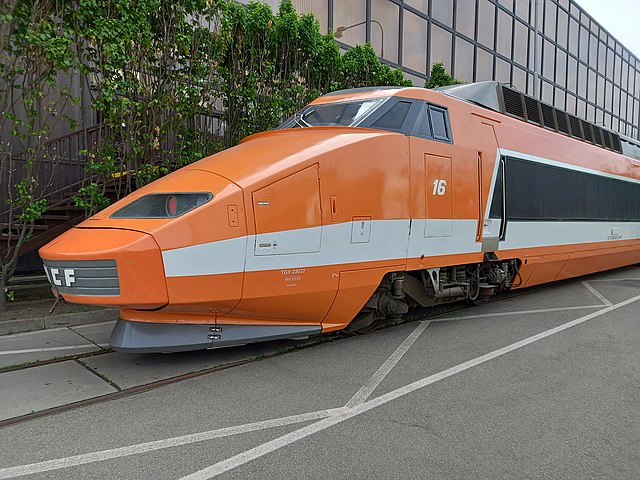
We know, of course, about the famous French TGV, or Train à Grande Vitesse. Since 1981 these sleek trains have carried over 100 million passengers a year at speeds averaging almost 200 mph from Paris to all corners of the nation.  Passengers can travel in either first or second class (Coach) and enjoy on-board meals and beverages along with free Wi-Fi.


Building on that success, in 2013 the French railroad SNCF added another option:  a cheaper, all coach-seating service called OuiGo.  But unlike Amtrak’s slower (non-Acela) trains, the OuiGo trains also run at high speed on the same tracks as the TGV.

A regular TGV trip almost 244 miles from Paris to Lyon would cost $75, but on the OuiGo it only costs $32.  Compare that to Amtrak’s Acela from Washington to NYC (only 225 miles) which costs $120 in Business Class (there is no “coach” on Acela) or $62 on a slower Northeast Corridor train.


Why does Amtrak charge so much more?  Because they have a rail monopoly.

The French OuiGo trains are usually double-deckers and luggage costs extra.  There is no Wi-Fi and no food service onboard.  But the OuiGo service has proven immensely popular with only half of initial riders saying they opted for the cheaper ride instead of the full-service and more expensive TGVs.

In other words, the railroad had grown its market share of travelers, attracting new passengers who might have driven or taken a bus.  A quarter of those surveyed said if it wasn’t for OuiGo they wouldn’t have taken the trip at all.

But now the Europeans have added a new enhancement:  competition.

On that popular Paris to Lyon run (where TGV got started) and the Paris to Milan journey, it’s not just the French TGV that’s on offer.  The Italian high-speed Trenitalia is also running.  Now passengers have even more choices.


The Italian railroad offers Coach fares matching OuiGo’s, First Class tickets comparable to the TGV and an Executive Class ticket with waiter-served a la carte meals in a car with only ten seats.  There’s also a private meeting room available with a flat-screen TV.

What has competition meant on this line?

Well, lower fares, for one.  Fares have dropped as much as 17% as service increased.  And best of all, the total number of tickets sold has more than doubled:  more trains, more choices, lower fares, more train riders… and fewer cars on the road.

Train service is so good in France that the EU has approved plans to ban short distance flights in France on busy routes well-served by high-speed rail.  It’s all part of the French taking their climate initiatives seriously.

Imagine Washington to NY air shuttles being legislated out of existence.  Imagine Amtrak offering cheaper, but still high-speed, options maybe even including competition.

That’s what we’ll discuss in next week’s column.


December 30, 2022

BRING BACK THE QUIET CARS

It’s time for Metro-North to bring back the Quiet Cars.

Canceled during the pandemic, the railroad has been dragging its heels in returning this important passenger amenity despite pleas from both passengers and rail advocates alike.

A little history:


The idea of dedicating one railcar on each train to a peaceful, cellphone-free, “library like” atmosphere originated on Amtrak in 2000 when daily commuters from Philadelphia to NYC made the suggestion.  The railroad embraced it and eventually rolled it out to all of their trains.

Best of all, Amtrak conductors enforced the rule, reminding offenders they should either comply or move to another car.  They once even chastised then-NJ Governor Chris Christie for yapping on his cellphone.  And on one overnight train from Oakland to Portland a woman was arrested, charged with disorderly conduct and kicked off the train for talking for 16 hours on her phone!

Quiet car violator de-trained, arrested.

As early as 2006 (while serving on the CT Rail Commuter Council) I asked Metro-North to follow Amtrak’s lead (and that of many other major commuter railroads) and add Quiet Cars to our trains.  They downright refused.

Finally, in 2011, Metro-North relented, offering to experiment with the idea.  Almost immediately it ran into problems… not because passengers didn’t want a little peace and quiet but because Metro-North conductors wouldn’t enforce the rules.


Sure, they made the occasional PA announcement and posted signs.  But when passengers started loud conversations on their phones and got icy stares from their fellow riders, conductors just looked the other way.

That’s strange.  Conductors have no trouble enforcing other rules like showing tickets, banning smoking and luggage on the seats.  But in most cases, they did nothing to enforce this one simple rule:  Please keep quiet.

We saw the same thing happen during COVID when the TSA instituted federal rules about wearing face masks onboard:  no enforcement, so little or no compliance. 

Apparently, the conductors didn’t want to be confrontational.  But by looking the other way when they encountered scofflaws, that just lead to passengers confronting each other.  Is that what the railroad wanted?

During the pandemic the Quiet Cars just disappeared.  But now, when the railroad claims to be trying to entice passengers back on trains, they still refuse to return  this simple amenity to make rail riding more tolerable.

The Commuter Council has spoken up on behalf of riders by writing letters.  But CDOT said “talk to the railroad” though the railroad spent four months not even giving the Council the courtesy of a reply.

This time I hope Metro-North does two things:  bring back the Quiet Cars and enforce the rules. 

They used to tell us that “train time is your own time”… time to work, read a book or even take a nap.  But train time is really “shared time” with up to 100 other passengers on each car.  That’s why it’s called mass transit.

I think we’d all enjoy our commute a lot more if we showed consideration for our fellow riders.

December 24, 2022

REMEMBERING ROBERT MOSES


With the impending opening of the “new” Grand Central Madison rail station serving the LIRR, an important milestone in the region’s transportation history will be made.  And, in historical perspective, one man’s name comes to mind:  Robert Moses.


Awhile back when I gave a guest lecture to a group of urban planning graduate students at UCONN  I made reference in the class to Robert Moses and these planners of our future just gave me a blank stare.  “You do know who Robert Moses was, don’t you?” I asked.  They did not.  I was shocked.

Robert Moses

What kind of education were they receiving that they didn’t know the name of the single individual who so changed the NYC area’s transportation landscape in the last century.  

From the 1930’s to the 1960’s Moses directed the building of 416 miles of parkways (Long Island’s Northern & Southern State and Westchester’s Taconic, to name a few), many bridges (the Tri-Borough, Throgs Neck, Henry Hudson, Verrazano-Narrows as well as the Brooklyn Battery Tunnel) and designed Jones Beach and the NY State Parks system.  He orchestrated two Worlds Fairs (1939 and 1964) and helped bring the UN’s headquarters to NYC.


Robert Moses’ grip on power came from appointment to 12 different job titles though he was never elected to public office.    Despite all this work he did nothing for mass transit.  He loved cars but didn’t really care for people who did not own them.


In locations where others had envisioned expanding the city’s subway lines, he built roads, displacing thousands of residents.  Robert Caro, author of the Pulitzer prize winning biography of Moses, “The Power Broker” even called Moses a racist, because he built motorways for the middle class while discouraging the car-less (people of color) from visiting Jones Beach by making the parkway bridges too low for buses.

Robert Caro

He opposed blacks moving into Stuyvesant Town, a Manhattan development on the lower east side for veterans.  City swimming pools in black neighborhoods were kept cold to discourage blacks from using them.


Moses’ dénouement came when he tried to build the elevated, ten-lane Lower Manhattan Expressway which would have connected the Holland Tunnel to the Manhattan Bridge straight through Greenwich Village and Little Italy, evicting 2000 families and 800+ businesses.  “The Master Builder” called it “slum clearance”, but residents like Jane Jacobs (author of the “Death and Life of Great American Cities”) fought back and the city’s artistic heart was saved.


Proposed Lower Manhattan Expressway

Robert Moses was not an evil man but a product of his time.  Today, many hail his accomplishments and think we need a benevolent despot like him to get things done in transportation and urban planning, even if a few people get hurt along the way.  It’s all for the greater good, Moses once said:


"I raise my stein to the builder who can remove ghettos without moving people as I hail the chef who can make omelets without breaking eggs."


History will judge Moses… those he helped and those he hurt.   Love the omelet, forget about the eggs?  But for graduate students at UCONN to be unaware of this man, what he built and how, worries me greatly.  To paraphrase George Santayana:  those who cannot learn from history are doomed to repeat it. 


December 16, 2022

The NEW Grand Central

Almost 110 years after it first opened, Grand Central Terminal is getting a new addition:  Grand Central Madison.

First conceived in the 1950’s, this new station was built 14 stories under ground, deep in Manhattan bedrock.  It connects with new tunnels bored beneath Park Avenue

connecting to a double-deck tunnel at 63rd street (built in the 70’s) traveling under the East River and emerging in the Sunnyside rail yards in Queens.

I toured the construction site a decade ago, wading through the mud and muck, in a scene that almost defies description: four huge circular tunnels, two on top of two, emerged from a wall of solid stone into what would become the new station.  It looked like a scene out of a James Bond movie.


The “East Side Access” project ballooned in cost from an initial $3.5 billion to over $11 billion.  It was supposed to be completed by 2010 but… well, you know how these things go.

When it’s up and running (hopefully by the end of the year),  this new 350,000-sq-foot subterranean station will serve 162,000 Long Island Railroad passengers each day carried on 24 trains each hour, 20 hours a day.  Some Long Island commuters will reportedly save 40 minutes commuting time, not on the LIRR but by being closer to their jobs in the Grand Central area, saving the cross-town trek.

Nice, you say.  But what’s in it for Connecticut riders of Metro-North?

Well, more crowding on the already crowded Lexington Avenue subway, for one.  But this new station will also mean some New Haven line trains will be able to terminate, not at Grand Central, but Penn Station.


Penn Station is maxed out for trains… Amtrak, NJ Transit and the LIRR.  But now that many of those LIRR trains will end up at Grand  Central, that leaves room for some Metro-North New Haven line trains to go to the west side.

Connecticut trains heading to NYC either hang a right turn at New Rochelle to go to GCT or can now go straight, just as Amtrak does, continuing over the Hell Gate Bridge into Queens and then under the East River to  Penn Station.

And on that new route they’ll soon service four new train stations in The Bronx within one mile of a half-million transit-starved residents.  Again, nice for them, but what’s in it for us?  I mean, who wants to go to The Bronx?

The better question is… might not those Bronx residents want to look for work in Connecticut?  Yes, indeed they undoubtedly will.  And they’ll get there not by clogging I-95 but by catching a train.

PS:  Remember Governor Lamont and CDOT’s promise to cut Metro-North commuting times to NYC?  This is how they’re going to do it… because New Haven line trains running to Penn Station can actually get there faster than going to Grand Central, not by much, but enough to say “we did it”.

Yes, it’s years late and billions over budget, but this “new” Grand Central and its consequent changes to the region’s commuting patterns will make history.


THE MUSEUM THAT OWNS ITS OWN RAILROAD

Happy 30 th birthday to the largest railroad museum in Connecticut, the Railroad Museum of New England in Thomaston. It was in 1996 that...