May 31, 2024

CTFASTRAK: #1 IN THE US

Did you know that Connecticut is home to the “best BRT” system in the US?  Do you even know what BRT is?

Well, BRT stands for Bus Rapid Transit, and Connecticut’s almost ten year-old CTfastrak has just been named the best such system in the US by the Institute for Transportation and Development Policy.

CTfastrak is the express bus system between New Britain and downtown Hartford, operating on a dedicated “guideway” of 9.4 miles which runs along an abandoned railroad right-of-way adjacent to the New Haven to Springfield Hartford rail Line.  It’s a special buses-only highway with ten stations.


Fifteen years in the planning, CTfastrak was designed to provide an alternative to driving on the usually-congested I-84.  The first ever BRT system in the state, CTfastrak cost $567 million with 80% of the funding coming from the federal government.

Eight bus routes run along the guideway with headways of as little as seven minutes between buses.  When west-bound buses reach the end of CTfastrak in New Britain they either turn around or continue on along city streets to destinations as distant as Bristol, Central CT State University and Waterbury.

Fares range from $1.75 for a two-hour pass to heavily discounted fares for kids, seniors and monthly pass holders.  To expedite boarding, you must buy your ticket before hopping on the bus (perhaps using their Token Transit app) in case random ticket inspectors ride along.  Get caught without a ticket and the fine is $75.

Special 60-foot, articulated buses were ordered for CTfastrak, each capable of seating 60 customers.  Many of the buses are diesel-electric hybrids, using regenerative charging while braking.  Speed limits on the guideway vary but top out at 45 mph.  And yes, the buses include free WiFi (Metro-North take note!).


According to CDOT, ridership on CTfastrak last year topped out at 2.8 million passengers.

Because the buses operate on their own highway, there are plans underway to test autonomous driving.  But CT state law still requires a human behind the wheel acting as a Safety Operator.

Of the riders on CTfastrak, 50% earn less than $75,000 a year.  Fewer than half of them own a car so these buses are the best (or maybe even the only) way for them to get to and from work, doctors’ appointments and to see family and friends.  Signage and announcements on the bus are bilingual.

Around the bus stations on CTfastrak there has been “substantial development” according to Benjamin Limmer, CDOT’s Chief of Public Transportation.  Transit oriented development (T.O.D.) was always part of the plan, encouraging housing and offices within walking distance of the stations.

There has been discussion about expanding the BRT network to the east, possibly as far as the UConn campus in Storrs, but buses would have to take the HOV (high occupancy vehicle) lanes on I-84 and I-384 and then switch to the local roads.

BRT will also be coming to New Haven in 2029, improving service for 40% of existing riders and, hopefully, attracting more.   CDOT is currently designing the new line, to be called MOVE New Haven, under a $25 million federal grant.


May 23, 2024

DROWSY DRIVING

In my college days I did some strange stuff… like driving all night from Chicago to NYC, hitting 75 mph on Interstate 80, just me and the trucks.  I was so tired and did everything I knew to stay awake… open the windows, crank up the radio and keep on rolling.  Pretty dangerous, but what did I know?

Now, being older and wiser, I realize that as many as 100,000 auto accidents each year are tied to drowsy driving,  Those crashes are tied to 1500+ deaths and 71,000 injuries.  Nodding off behind the wheel is a serious issue.

Our circadian rhythms mean we have times when we’re ready for the demands of driving and others times when we’re not.  Nighttime, logically, is when our bodies most want us to sleep.

Is it by chance that many of the recent wrong-way crashes on our parkways and interstates have occurred in the wee hours of the morning?

But if you’re a “morning person” you should also know that we have an afternoon lull between one and five PM when our body wants to nap, our temperature dips and we’re again at risk of causing an accident.

Coffee will help, right?  Well, caffeine can keep you alert but it takes about a half-hour to kick in and the effect only lasts two or three hours.  Even quaffing a Red Bull (80 mg of caffeine in a can) can’t prevent you nodding off for “micro sleeps” of a few seconds.  At 65 mph, that’s long enough to travel 100 yards.

The AAA’s research shows that almost half of those drivers involved in crashes said they didn’t feel drowsy, even though they were.

So, be honest:  have you ever fallen asleep behind the wheel, even for a few seconds?  The AAA’s research shows that 41% of respondents admitted to nodding off sometime in their driving career and a quarter of them said it happened to them in the last month.

Alcohol, prescription (and illicit) drugs only make things worse.  So too do changing shift work and disorders like sleep apnea (both tied to the deadly  Metro-North derailment at Spuyten Duyvil in 2013).

Driving, especially at high speed, requires our full attention, so here are some tips for your next road trip:


·       Don’t drive if you’re feeling sleepy.

·       Travel with a passenger.  They can alert you if you’re showing signs of nodding off (drifting, tailgating, missing your exit) and can take turns behind the wheel.

·       Schedule a rest break every 100 miles.  Driving a max of 500 miles a day is asking a lot from your body and brain.

·       Try taking a 20 minute “power nap” in a safe location.

Take care of yourself, and here’s hoping your next road trip is a safe one.


May 17, 2024

NEW CARS FOR AMTRAK

Don’t you just love that “new car smell”?  Well, that’s coming… slowly… to Amtrak, as the nation’s passenger railroad replaces its old fleet of cars.

GOODBYE AMFLEET:      Amtrak’s remaining fleet of almost 600 Amfleet cars date back to the 1970s and was modeled after the Budd Company’s successful Metroliner cars, which ran from 1969 to 2006.  Some of those Amtfleet cars have traveled over four million miles by now so, despite maintenance and the $17 million “refresh” of their interiors in 2017, they are ripe for replacement.

Amfleet


The round-sided stainless steel cars, mimicking an airplane, have smaller windows than what’s planned to replace them.  Connecticut’s own Cesar Vergara, who designed the interior of Metro-North’s M8 cars, criticized the Amfleet design for trying to look like a jetliner. 

“The vision for the future of the railroad should be based on defining its own dreams, not appropriating them solely from someone else's experience,” he wrote in 1992.

HELLO AIRO:                  The new cars Amtrak has ordered will be built by Siemens, which has an order for 83 trainsets which should be in service by 2026 if all goes well.  The first prototype debuted in October 2023.  The total contract is worth more than $3 billion.

New Airo Cars

The new cars will have the same two-by-two seating with AC and USB plugs for each row.  Their tray tables will be bigger and stronger than Amfleet’s clunky models and will feature a cup holder so your java doesn’t hit your lap if the train should lurch during the ride.  And yes, they’ll also have 5G Wi-Fi (Metro-North take note!). 

Pulling the trains will be electric locomotives, also built by Siemens.  Outside of the electrified Northeast Corridor these Charger locos will be diesel.  There’s also a hybrid engine in design that will run electric “under the wire” and use batteries on non-electrified lines.

When delivered, the first Airo trains will run in the Pacific Northwest then come to Washington to Boston trains in the Northeast.  There will be traditional coaches, first class and cafĂ© cars.

The new cars are based on Siemens’ Venture cars already running on Florida’s Brightline and Canada’s VIA Rail.  Those cars are similar to the company’s Viaggio Comfort electric trainsets running in Austria.

TESTING:     The new cars have over 4000 electrical connections, so extensive testing will be required before they go into service.  As Metro-North learned when it took delivery of its new M8 cars from Kawasaki in 2010, it takes a while to work the bugs out.

BUFF TESTING:     One of the most interesting tests that all new trains in the US must pass is called “buff testing”, to see how they’d survive a crash.  The cars’ under-frames must sustain 40 tons of stress without deforming, a much higher standard than European or Japanese requirements.

That means US trains are heavier and less fuel efficient but, as we’ve seen in European high speed train crashes, will be much more survivable in the event of a collision.

It will be a while before the new Airo fleet passes muster and joins the Acela-replacement Avelia Liberty trains that, after extensive delays, will go into service on the Northeast Corridor later this year.


May 10, 2024

HERO TRUCKER, WRONG WAY CRASH, TRAINS & FERRY

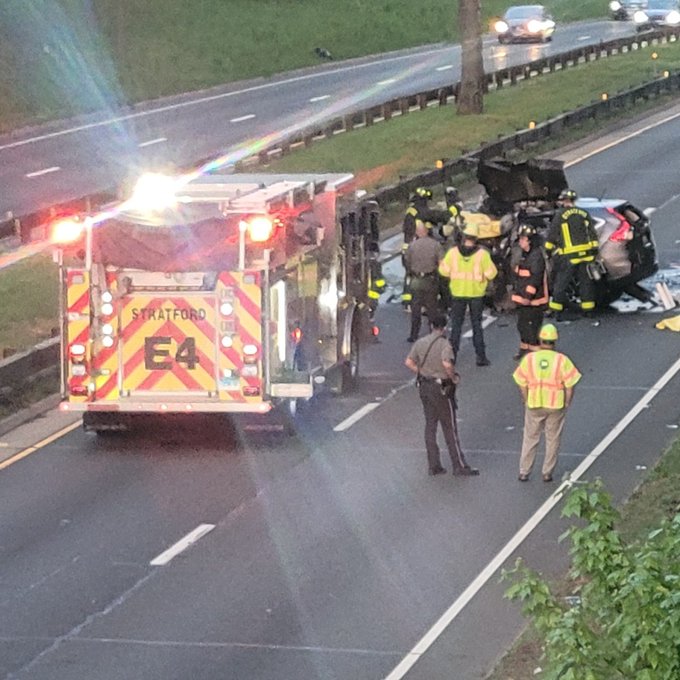
Kudos to the CDOT for their amazing work last week cleaning up from the fiery truck crash in Norwalk which closed I-95 causing countless hours of delays and detours.  It’s amazing what CDOT crews can do operating on a deadline and with $20 million in federal money.

HERO TRUCKER:    Kudos also to Hazeth Aracena, the truck driver turned hero who was involved in that crash.  When the Camaro that seems to have caused the crash (as was reportedly confirmed by the tanker truck’s dash-cam) swerved toward Aracena’s tractor trailer, he tried to move out of the way, only to strike the tanker truck.  But Aracena jumped from his cab and rescued the Camaro driver, pulling him from his car.

ANOTHER WRONG-WAY CRASH:        This week there was another wrong-way crash, this time on the Merritt Parkway, claiming four lives.  Police have yet to identify the driver going the wrong way, pending an autopsy.  Was that out-of-state driver “impaired” or just confused… or both?


We’re only in May but there have already been four wrong-way crashes in the state this year claiming 11 lives.  That compares to seven who died last year in similar accidents.

So if CDOT can return I-95 from a disaster-scene to regular service in 80 hours, why haven’t they been able to post all the new warning signs at parkway entrances they promised months ago, preventing further carnage?

SHORE LINE EAST:         The Connecticut legislature has adjourned, but not before finally restoring a bit more funding for train service on Shore Line East, the commuter railroad between New Haven and New London.  The railroad is still only operating at 40% of pre-COVID levels and advocates were seeking $10 million to bring back more trains.  The Governor said no, but lawmakers gave them $5 million, enough for four additional trains.

That still only gives Shore Line East riders 20 trains a day, far from enough to encourage people to leave their cars at home.  Still, it’s a small victory for the pro-train forces in Southeastern Connecticut, what one local resident calls “the forgotten corner”.

BRIDGEPORT FERRY:     A great start to the summer season for the Bridgeport – Port Jefferson ferry.  They started their three-ferry service early this year adding what VP / GM Fred Hall says is the secret for success: “frequency and capacity”.  In the first few days of this month ridership is already up 15%, perhaps helped by drivers trying to avoid the I-95 shutdown that weekend.

A fourth ferry, the “Long Island” has just been launched in Florida and they hope to have it in service by the late fall.

Nearing completion nearby in Bridgeport is that city’s new high-speed ferry dock, built with $10.5 million in federal funds and $700,000 from city taxpayers.  Of course, there’s nobody planning to offer fast ferry service there, nor do I predict there ever will be.

Just another Bridgeport boondoggle.


May 04, 2024

TRUCK INSPECTIONS

Another week, another fiery truck crash on a Connecticut highway, this time in Norwalk on I-95.

You’ll remember it was just last June when a similar inferno closed I-95 in Philadelphia as a tanker truck blaze practically melted the steel, collapsing the highway.  And last April there was another tanker fire on the Gold Star bridge in New London.

If your memory is really good you might recall a similar truck crash on I-95 in Bridgeport on the elevated section of highway back in 2004.  The resulting fire melted holes in the highway.

What the heck is going on?

As I’ve written before, trucks are most often not to blame for highway accidents.  Their seasoned, professional drivers are just trying to deliver their cargos to local stores and gas stations and get home safely.  But don’t get me started on why big-rig trucks are driving illegally on the Merritt Parkway, which they are!

It will take some time for the Connecticut State Police to finish their investigation of who and what caused the most recent crash in Norwalk, but we should still be asking “is the state doing enough to keep unsafe trucks off our highways?” 


Connecticut has weigh / inspection stations in Greenwich, Danbury, Middletown, Union and Waterford as well as roaming, portable scale teams.  When the trucks and buses roll in they are weighed, their drivers’ log books and loads are inspected and, most importantly, their brakes are checked.  This is done by skilled State Police and DMV staffers who take their job (and your safety) seriously.

Surprisingly, though I-95 sees the most traffic, the Greenwich weigh station was open the least but issued the most fines last year.

Connecticut receives federal funding to pay for this work and violators are hit with stiff fines… the most common tickets issued are for being overweight, having defective equipment, fuel tax or registration violations and, my favorite, “failure to stop”.  Of course, no trucks have to stop if the inspection stations are closed, which they usually are.

Remember:  overweight trucks are not only unsafe, they cause damage to our highways that we end up repairing and paying for with the gas tax.


For trucks just passing through the state, the word goes out on the CB radios and social media as truckers alert each other which stations are open.  If Greenwich is open, they avoid I-95 and take I-84 because Danbury probably won’t be open, etc.

For trucks traveling up and down I-95 and I-84 from other states, Connecticut participates in the PrePass Program, a kind of E-ZPass for truckers.  If a vehicle was inspected in, say, Maryland, it can skip a stop at Connecticut weigh stations.

Trucking advocates (yes, there are some) say the weight / inspection stations are a waste of personnel: that troopers should be patrolling the highways looking for dangerous drivers not standing around inspecting trucks, the majority of which are not violating any rules.

But I still think all of Connecticut’s weigh / inspection stations should be open all the time.

It looks like the Feds will pick up the $20 million tab for last week’s Norwalk incident.  But nobody can reimburse us all for the time we lost waiting in detours and delays, nor the lost business to local merchants.


April 26, 2024

T.O.D. DONE RIGHT

It’s the buzzword du jour in Hartford these days:  TOD, or Transit Oriented Development.  What it implies and how it’s implemented aren’t always the same.

The idea is to put new, denser housing near train and bus stations, encouraging folks to drive less by being able to walk from their homes to mass transit, taking them to and from their jobs.  An admirable enough goal in a state that’s failing to get its war on global warming underway.

But just plopping housing, affordable or luxury, near a train station doesn’t mean people will want to live there if the only amenity is a short walk to transportation.  So how is TOD done right?  Look no further than Darien Commons, the 9-acre complex across from the Noroton Heights train station, opened in 2022.

Darien Commons @ Noroton Hts RR Station


Developed by Federal Realty, a REIT with more than 100 properties totaling 26 million sq ft, the mixed use development shows the evolution of such projects.  When it began in 1962, Federal specialized in outdoor shopping centers with grocery stores as the main (anchor) tenants.  But starting around 2000 the company pivoted, adding housing above the retail stores, still in an outdoor, walkable environment.

“It was fundamental to our planning to place new developments near train stations,” says Patrick McMahon, Sr VP of Federal who oversaw the Darien project.  “But TOD is more than just building apartments,” he adds.  “It’s about designing a community”.

So Darien Commons has 122 apartments and 75,000 sq ft of retail space.  Federal had a specific strategy of mixing stores answering daily needs (food, banking, exercise) with upscale incidentals (pet store, restaurants, nail salons).  It’s like its own village:  everything you need is in the complex and your trip to and from your job starts right across the street.

Tenants-only patio & BBQs


That’s resulted in greatly reduced car ownership for the tenants:  just 140 cars for 122 apartments in a town with 17,000 registered cars for a population of 22,000 (32% under age 18).

Mind you, the apartments are not cheap.  According to Trulia, the few available one bedrooms start at $3500 per month and two bedrooms at $4600.  But under the town’s inclusionary zoning policy, 14 of the units are “affordable” ($1600 per month). 

But with work-from-home and reduced daily commuting, does TOD still make sense?  McMahon says yes.

“Most of our tenants are still catching the train two or three days a week,” he says, even though they’ve added “Zoom Rooms” (small conference rooms) to their mix of tenant amenities.  Those also include a private patio with BBQ grills, a party room, gym and a bookable hotel room for visiting guests.

Maybe there’s a lesson here for the housing zealots eyeing TOD as the solution for the state’s housing, especially along Shore Line East line where CDOT still seems opposed to restoring train service.

Will developers really want to invest in new housing near train stations if they don’t offer adequate rail service?  And without TOD, will demand for trains ever come back? 

April 19, 2024

YOU ARE THE TRAFFIC

Stuck in bumper-to-bumper traffic the other day on I-95 I grumbled to myself “Where is all this traffic coming from?”   And then I remembered:

If you’re stuck in traffic, you are the traffic!  Guilty. 

But what’s being done to reduce all that traffic?

In New York City they’re about to embark on a daring test:  Congestion Pricing.  Barring any last minute legal moves by opponents, it will soon cost $15 to drive your car into Manhattan below 60th street.

Though this will be a first for the US, congestion pricing has been tried in other big cities going back fifty years.  Singapore has been doing it since the 1970’s and is still fine-tuning the system.  In London, where a congestion zone fee (now almost $19 per day) was instituted in 2003, traffic dropped by 18% in the first year but has since returned.

The idea of congestion pricing is to discourage driving while raising billions of dollars to support mass transit.  Just like highway tolls, those who pay (to drive) should also see some benefit (less traffic) and better mass transit alternatives.

But now NYC wants to add another twist:  lowered speed limits.  As part of that state’s budget package, smaller streets in the city would see speed limits reduced from 25 to 20 mph in the name of pedestrian safety.  So… maybe less traffic (thanks to the tolling) but maybe slower trip times?

And what is Connecticut doing to battle our traffic congestion and improve highway safety?  Not enough.

The CDOT has been marking Work Zone Safety Week with an awareness campaign reminding all who drive to slow down where work is being done roadside.  Even when sober, we drive too fast.  Since the introduction of just three experimental speed cameras in work zones last year, 20,000 drivers were issued warning tickets.


Lawmakers have apparently again killed a bill that would lower the legal blood alcohol limit from .08 to .05.  This was tried last year and also failed despite the fact that Connecticut ranks #4 in the US in fatal accidents.

Also reportedly killed was a bill which would have allowed municipalities to limit the sales of “nips”, those small airline-style booze bottles found littering our highways.  A nickel-a-nip bottle deposit returned $11 million to towns and cities, giving you a sense of the popularity of the booze-to-go bottles:  just quaff and toss.

Just quaff and toss


According to NHTSA traffic data, from 2017 to 2021 there were almost 2000 Connecticut drivers involved in fatal crashes and 40% of them were legally drunk.  And of those who were the drunkest of the drunk (with a blood alcohol limit over 0.15), Connecticut ranked #1 in the nation. Congratulations.

This failure by lawmakers to keep our highways safe by keeping drivers sober just sends the wrong message, starting with their own members.  You’ll remember State Rep Robin Comey who was “reeking of alcohol” after rolling her car in front of the Capitol last year.  Her BAC reading was 0.1446.

While being processed by police, Comey was informed of the consequences if she refused a blood test.  Police body cam footage shows her joking “That doesn’t make sense.  I guess we’ll have to change the laws.”

THE FINAL BOARDING CALL

Planning a flight soon?  With fewer airlines to choose among (including newcomers Avelo and Breeze, both with bases in Connecticut), let’s t...