April 09, 2022

DE-ELECTRIFICATION OF THE DANBURY BRANCH


It was a huge mistake, one that commuters and planners have regretted for over sixty years.  For it was in 1959 that the last electric locomotive pulled a train on the Danbury branch.

Yes, that meandering 24 miles of single track railroad connecting South Norwalk and Danbury was once electrified. For 34 years, long before the invention of diesel locomotives, it saw electric trains running “under the wire”.

Why did that change?

Most rail historians, like former New Haven and Metro-North veteran Jack Swanberg blame one man:  Patrick B McGuiness, President of the New Haven.  “He was not a good railroad man,” said Swanberg, a master of understatement.  In his two years running the mighty, private and once profitable New Haven Railroad, McGuiness made terrible choices we’re still living with.

By the way, after leaving the New Haven he went on to ruin another railroad, the Boston & Maine, where he was indicted on charges of selling rail cars and pocketing the proceeds.

At the NH Railroad, predecessor to Metro-North, McGuiness cut maintenance and laid off staff, trying to goose up the stock price.  But it was when General Motors came calling that he made his biggest error.

The New Haven’s real profits came from running passengers and freight on the main line from NYC to Boston.  Because steam and diesel locomotives were not allowed in Grand Central, the New Haven was one of the first railroads to electrify, starting in 1909, eventually running all the way to New Haven.


But for trains running beyond New Haven they needed to change engines (from electric to steam and later diesel), an expensive and time consuming move. McGuiness thought he could avoid that expense when GM introduced its hybrid FL-9 loco, railroad’s Prius of its day, running all electric powered by third rail, then running diesel.

In the 1950’s the New Haven ordered sixty FL-9s from General Motors, replacing their classic but boxy looking EP-2 electrics built by General Electric.  By 1959 that meant no more electric service on the Danbury branch.  In 1965 they finally took down the copper catenary, selling it for scrap like some sort of junkie.

But the New Haven RR had problems:  it was facing a second bankruptcy as the passenger business was dwindling due to more cars on the newly opened I-95 and its freight business was hurting as well.

Plus, the FL-9s were not performing well. 

While the original EP electrics had 4000 hp, the hybrid FL-9s were less than half that.  And that meant poor acceleration and longer travel time, especially on commuter trains making a lot of stops.  Longer trains that used to have one electric loco now required two or three FL-9s.

The FL-9s were also expensive to maintain and dirty, even before we cared about air pollution.  And on the steep Danbury line where it’s a 360-ft climb from the coast to the Hat City, traction is a problem even today in the fall and winter.

In cold weather the diesels still have to be kept running all night, just idling in the yard (creating noise and air pollution).  Their 25 year life expectancy wasn’t impressive and overhauls were costly.

“It was a mistake to take down the wire (on the Danbury branch),” says Swanberg who has written extensively on the topic.   But electrics may be coming back on the branch.

After a stack of studies and plans calling for re-electrification, CDOT’s rail chief Rich Andreski says “we are serious this time”.  But rather than re-string the overhead wire, the solution may be a new hybrid rail car:  one that runs under the wire on the mainline and on batteries on the branch.

Influential (but lame duck) State Senator Will Haskell, Chairman of the Transportation Committee endorses the idea.  So fast, clean electric trains may yet return to the Danbury and other branches of Metro-North.

But only if we hadn’t made that mistake 63 years ago and taken down that wire.


Photo credits:  T.J. McNamara, Shoreliner Magazine, Wikimedia

April 03, 2022

SELF SERVE GAS IN NEW JERSEY? FUGETABOUTIT!

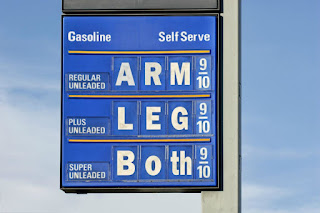
You can pump your own soft-serve ice cream at trendy yogurt shoppes.  But you still can’t pump your own gasoline in New Jersey. Why?    Once again, lawmakers in Trenton have killed an effort to save motorists money at the pump, allegedly in the name of safety.


Self-serve gasoline has been the rule nationwide for 73 years, ever since the first pump-your-own gas station opened in California in 1947.  Prior to that, all gas stations were full-service.  Not only did the “pump jockeys” fill your tank but they’d check your oil, water levels in your radiator and wash your windows… and maybe even give you a set of free steak knives for your 35-cent-a-gallon purchase.  Remember those good ol’ days?


When the self-serve idea came to New Jersey in the late 1940’s, a local gas station owner named Irving Reingold in Hackensack started offering a discount for the do-it-yourselfers.  Rather than charging the going rate of 21.9 cents a gallon, his self-service stations charged only 18.9 cents.  His operation became wildly popular, prompting competitors to retaliate by shooting up his station and forcing Reingold to install bullet-proof glass.  Competitors then persuaded the state legislature to ban the practice of self-serve and Reingold eventually went out of business.


So, in 1949 Trenton lawmakers passed the Retail Gasoline Dispensing Safety Act, which read:


“Because of the fire hazards directly associated with dispensing fuel, it is in the public interest that gasoline station operators have the control needed over that activity to ensure compliance with appropriate safety procedures, including turning off vehicle engines and refraining from smoking while fuel is dispensed.”


That law is still on the books in New Jersey, the only such state law in the nation. But recent polls show 73% of Garden-staters actually prefer being served by attendants.  Some of them have never pumped their own gas in a lifetime of driving.


The fine for violating the law is $500, though it’s seldom enforced.  Try pumping your own gas in New Jersey, assuming you can activate the pump, and you’re more likely to get a scolding than a ticket… as I have found from personal experience.  One study in 2015 showed that state had issued zero infractions in the previous two years for that heinous “crime”.


The town of Huntington on Long Island has a similar ban on self-serve, despite appeals from gas station owners to stay competitive.


Garden State residents have been trying for years to rescind their self-serve ban.

In 2015, State Assemblyman Dean O’Scanlon introduced a bill to allow self-serve saying he was “offended by people that argue that New Jerseyians are mentally incapable of pumping their own gas without setting themselves on fire”.  


Cynics say that New Jersey’s self-service ban is to protect thousands of pump-jockey jobs and higher profit margins for station owners.


Here in Connecticut, lawmakers seem to trust Nutmeggers with pumping their own fuel.  The new technology at pumps helps prevent accidents and the cases of motorist self-immolation are exceedingly rare… so far.

March 26, 2022

THE GAS TAX HUSTLE

 Attention all chiropractors and physical therapists!  Please report immediately to the state Capitol to treat the sore muscles of lawmakers who’ve twisted themselves into a pretzel, patting themselves on their backs for cutting the gasoline tax!

What a surprise (in an election year) that lawmakers voted unanimously to cut the gasoline tax 25 cents a gallon from April 1 – June 30th.  What a massive sense of relief for money-short taxpayers to save, what, $25 per car this spring.  Wow!  Let’s all drive to Disneyworld.

And what do you think will happen in June when summertime driving season really kicks into high gear.  Who’ll have the guts to vote against a probable extension of the tax cut heading into campaign season, even if gas prices have dropped by then?

While the savings may be tiny for each driver, the loss of tax revenue for the Special Transportation Fund (STF) will be significant… about $90 million.  That loss will be made up from other budget surpluses in Hartford which seems to be awash with taxpayer money.

In addition to the gasoline tax cut, we can all go on a spending spree with a sales tax holiday on clothing the week before Easter, but only on duds and footwear priced at less than $100… assuming it’s in stock, given the supply chain mess.

One group that will benefit from this bipartisan bounty will be bus riders.  They’ll literally get a free ride for three months.  Those folks deserve a break, as for them even the existing $1.75 fare adds up and represents more of their income than most commuters.

As for the Gold Coast fat-cats who ride Metro-North… let them eat cake.  No fare cuts for you beyond the railroad’s recently announced discount deals trying to entice riders back to the office.

This isn’t the first time our lawmakers have messed with the gas tax.  Some of us remember 1997 (when Transportation Committee Senate Chair Will Haskell was literally in diapers) when the tax was cut 14 cents a gallon. That costing the STF billions in money that could have kept our roads and rails in better shape.

What is really needed is what lawmakers refuse to do:  fix the state’s gasoline price-fixing oligopoly known as “zone pricing” that creates huge disparities in what the pump price is based solely on geography.  Why does gasoline cost 40 cents a gallon more in Greenwich than in Bridgeport?

And when, oh when, will we stop focusing on internal combustion vehicles draining our wallets and polluting our air?  When will we get serious about getting low m.p.g. junkers off the road, replacing them with clean, electric power?

When?  When we replace our part-time pols with full time legislators.

That’s why I enthusiastically endorse the idea of a pay raise for our lawmakers.  Their current $28,000 salary is a joke, leaving them fudging their travel expenses to scrape by, hoping to eke out a fatter pension.

Legislators’ jobs may be part time, but their responsibilities are full time plus OT, not to mention the commute.  At today’s pay scale only the rich can afford to do the job which hardly means they represent, let alone can identify with, their diverse constituents.

You get what you pay for.  Connecticut deserves full time, well paid lawmakers not the clown-car of political pandering we have now.

March 24, 2022

RIDE SHARING IS BACK

How’d you like to save thousands of dollars in commuting costs by car?  And at the same time cut the number of vehicles on our highways?

The answer:  ride sharing.

With the sudden surge in gasoline prices there’s renewed interest in car / van pooling, as the folks at CTrides can attest.  They’re the state agency tasked with selling the idea of “green rides”, though I think it’s the green in your wallet that most captures commuters’ attention these days, not just saving the environment.


But it is true that 38% of all greenhouse gases come from transportation and with the vast majority of car commuters driving solo, sharing the ride can certainly cut down on Connecticut’s terrible air quality, worse in some areas than California’s.

Remember our clear blue skies at the start of the pandemic when nobody was driving?

Census data shows that  76% of commuters drive solo while about 8% share their ride.  Transit accounts for only 4.5% while telework (WFH) is about 7%, but climbing.  In Fairfield county transit and telework numbers are much higher given the time and cost involved with getting to jobs in NYC.  The long term effects of work-from-home are yet to be seen.

The CTrides folks promote all the alternatives to solo driving, ironic for an agency funded by the CDOT which spends billions on our roads.

But the excuses for not sharing a ride are many:

“I like driving my own car by myself”.  Well, do you like pay for gasoline and car repairs by yourself, too?

“My work schedule is always changing”.  CTrides can match you with others also on your ever-changing schedule.

“What if I need to get home mid-day in an emergency?”   CDOT sponsors an Emergency Ride Home program for enrolled companies, paying as much as $200 for an Uber up to four times a year.

There are plenty of benefits that come with ride sharing, aside from the cost savings.  Some interstates (I-91 and I-84) offer diamond lanes for car poolers.  Employers often offer preferred parking spots at work.

There’s even a federal commuter tax benefit of up to $280 a month for enrolled employees at companies.  Talk to your company’s HR department for details.

Still hesitant to share your ride?  Thousands do it daily on commuter rail with up to 100 passengers in a single (rail) car:  ride sharing on steroids!

Employers find that carpooling often increases morale and employee retention, even if your crew doesn’t join in comedian James Corden’s “Carpool Karaoke”.

CTrides also promotes rail and bus ridership as well as telework… anything to get SOVs (single occupancy vehicles) off the road.  They’re optimistic that the increasing costs of gasoline will encourage more commuters to ride share.

To sweeten the pot even more, CTrides offers a rewards program.  Just download their app, set up an account and log your “green rides”.  Accumulate enough points and you win restaurant discounts and cut-rate tickets to shows and attractions.  Participants save money and the environment.

March 12, 2022

THE UKRAINE, METRO-NORTH AND GASOLINE TAXES

In the waning days of WW II, the Americans sent a special unit into Germany to  find one man, not to bring him to justice but to eventually put him in charge of the US space program.  His name was Werner von Braun.

Now I think, whatever the outcome of the Ukraine conflict, a similar effort should be made to rescue Oleksander Pertsovskyi.  Not familiar with his work?  Well two million Ukrainians are benefiting from his skills.  He may have saved their lives.

You see, Pertsovskyi is head of passenger rail operations at Ukrzaliznytsia, the Ukrainian national railroad which is moving women and children west to safety and bringing men back east to the front lines.

As the Wall Street Journal has detailed, the Ukrainian railroads have increased passenger loads by 500%, and sent trains on detours to avoid shelling, so far with no injuries.  Their logistical flexibility has been amazing. 

Pertsovskyi must be rescued and brought to the US.  His first job should be as consultant to Metro-North.

Commuter rail in the US is silently celebrating the recent surge in gasoline prices, hopefully luring riders out of their cars and back to the trains.  Even before Putin attacked the Ukraine Metro-North had promised to add more trains, but not until the end of the month.

Last week, ridership reportedly doubled from the week before, but you wouldn’t

know it by looking at the railroad’s website.  After two years of daily reporting of ridership, the MTA has gone silent.  Bus and subway numbers are still being updated daily, but not the LIRR or Metro-North.  Why?

Pertsovskyi could get answers.

Why can he change the Ukraine national railroad in an instant but Metro-North can’t add extra trains the very next day when ridership soars and rush hour trains are standing room only?  Blame it on the union contracts, which require weeks of notification before a timetable change.

This isn’t a problem unique to union-bound MTA.  Experts tell me that NJTransit can only change its timetable twice a year.  Pertsovskyi could fix that too.

Our politicians’ answer to high gasoline prices:  cut or eliminate the gasoline taxes, Federal and state.  That is a terrible idea, a lesson we should have learned in 1997 when pandering pols cut the Connecticut gas tax 14 cents a gallon.

That cost our state a half-billion dollars a year to pay for road and bridge repairs, keep our highways plowed and our trains running.  We wouldn’t be talking about tolls if that gas tax hadn’t been cut.

Cutting gas taxes imperils the state’s ability to issue bonds.  And any “temporary” gas tax cut will be hard to overturn.  The Feds are not going to keep plowing money into commuter rail subsidies.

Pertsovskyi can’t fix that, but doubtless he’d be the first to point out that such a populist move to cut taxes in an election year is a short-term fix with long term consequences.

March 05, 2022

HOW TO SAVE MONEY ON GA$OLINE

The Russian invasion of the Ukraine has thrown the world energy markets into turmoil, raising the price of gasoline in Connecticut to more than $4 per gallon. And given that 26% of all energy in this country is spent on transporting people, sticker shock at the gas pump will affect all of us.


I’ve written before about our state’s crazy “Zone Pricing” for gasoline, which is why you’ll pay 42 cents more per gallon for fuel in Greenwich than in Bridgeport.  But wherever you drive, there are some simple ways of saving on gas.


DRIVE LESS:         Duh!  If you plan your trips and only drive when you must, you’ll not waste miles cruising the highway.  Map out your shopping.  Work from home.  Try walking. Ride a bike.


CAR POOL:         Even if just occasionally, try sharing the ride to work or the airport.  Check www.CTrides.com or www.rideshare.com,  which can help you find someone to share the ride. 


TAKE THE BUS:    Our region’s bus service is improving and is increasingly popular.  “The Coastal Link” bus from Milford to Norwalk along Rt. 1 runs seven days a week and costs only $1.75 (vs. $4.50 on Metro-North).  And the “I-Bus” from Stamford and Greenwich to White Plains still costs only $4.  


PUT YOUR KIDS ON THE BUS TOO:    Your tax dollars pay for school buses, so why do so many parents insist on driving their kids to school each morning in “the SUV parade”?  What are we teaching our kids about avoiding mass transit?


If you must drive you can save gasoline by avoiding these mistakes:


·         Don’t accelerate too quickly, especially from a dead stop.  Pretend there’s a raw egg between your foot and the gas pedal and ease into it.


·       While driving down the road, if you see the light ahead turn red, take your foot off the gas and coast to a stop.  It will also save wear and tear on your brakes.


·       Keep your vehicle as light as possible.  No need to waste fuel hauling extra weight.


·       Keep your tires properly, but not over-, inflated.  Softer tires increase road friction. Over-inflation may increase MPG slightly but causes more wear on your tires.


·       Keep your gas tank cap tightly closed. If you get air in your gas tank your engine has to burn more fuel.


·       Don’t idle your car unnecessarily.  Sitting still can burn one to two ounces of fuel a minute or about a gallon an hour that’s giving you zero MPG.


·       When you gas-up, do it in the morning when the station’s underground tanks are coldest and the fuel is the densest.


·       Replace your engine’s air filter as often as recommended by the manufacturer.  A clogged air filter has to work harder to combust the fuel, cutting down on efficiency.


·      Come the warmer weather, use your car’s air conditioner sparingly.  But for 60 mph highway driving, keeping your windows closed actually improves mileage by cutting down on drag.


·       Use your car’s cruise control to avoid unnecessary braking and acceleration, the two enemies of good MPG.


·       Just slow down.  Driving at 60 mph instead of 70 can save you two to four miles per gallon!


February 26, 2022

EVEN WITH HIGHER FARES IS COMMUTER RAIL SUSTAINABLE?

As Metro-North returns to charging peak fares at rush hour this week, it’s time to get honest about the unsustainable nature of commuter rail in Connecticut.

Sure, our state’s rail riders already pay some of the highest fares of any commuter line in the US (because the railroad’s subsidy, though high, is the lowest in the country), but those fares don’t come close to covering the actual cost of operations, let alone the cost of capital equipment (new trains, locomotives, stations).  Metro-North is losing taxpayers’ money with every trip… lots of it!


Back in the good old’ pre-COVID era, almost half of the railroad’s cash flow came from the sale of monthly commuter passes.  Now the railroad is offering a further 10% discount on those all-you-can-ride tickets to try to encourage dwindling sales.

Ever so slowly, commuters are coming back to their offices in New York, some very reluctantly:  not out of health concerns but because they’ve proven themselves so productive working from home and don’t want to trudge into the city if they don’t have to.

Avoiding the expense (in time and money) of a daily commute is now a major negotiating point in hiring.  And with 33 million Americans having quit their jobs in the past year, it’s a seller’s market for talent.  Demanding in-person, in-office appearance five days a week is a non-starter.

Once skilled workers have tasted the sweet fruit of working from home, bosses will never be able to take away that benefit.  That’s why weekday ridership on Metro-North is still just 45%.  I think it will be many years, if ever, that ridership is fully restored to the pre-COVID levels.

Yes, some rush hour trains are getting crowded.  To their credit, the railroad is adding additional service and speeding up some runs in late March.  There will also be new discounted 20-trip tickets for the occasional rider.  But all that still won’t be enough to win back riders.

Even when the trains were standing-room-only, the railroad was losing money.  Now with ridership down by more than half and fares being further discounted, those losses will compound.


On the heavily-traveled New Haven mainline  every trip (pre-COVID) was subsidized by taxpayers by $3.25.  On the Danbury and Waterbury branches, the per-trip subsidy was $17 and $24 respectively.  And on Shore Line East, every passenger ticket was subsidized by almost $50.

Now, with just half of its previous ridership, you can double those subsidy numbers and you’ll see the true cost of running this commuter railroad.

For now, Uncle Sam is picking up the tab as part of the Feds’ COVID relief package, which really means that taxpayers and future generations will pay for this bailout.  But these kinds of losses are unsustainable.  Something’s got to give.

Maybe service will be reduced, especially outside of rush  hour.  And if so, there may be layoffs of railroad staff.  Or fares will have to increase to cover the deficit, but that would only further discourage ridership.

Nobody expects a commuter railroad to operate at a profit.  If it could, the original New Haven Railroad would still be run privately.  No, commuter rail is a public service but needs to find a way to better adjust to the new work-life realities of a post-COVID America.

FLORIDA'S FAILING FOR-PROFIT RAILROAD

Should Connecticut’s commuter railroads be privatized?  That’s a suggestion I often receive from commuters hoping that railroads who treat...